
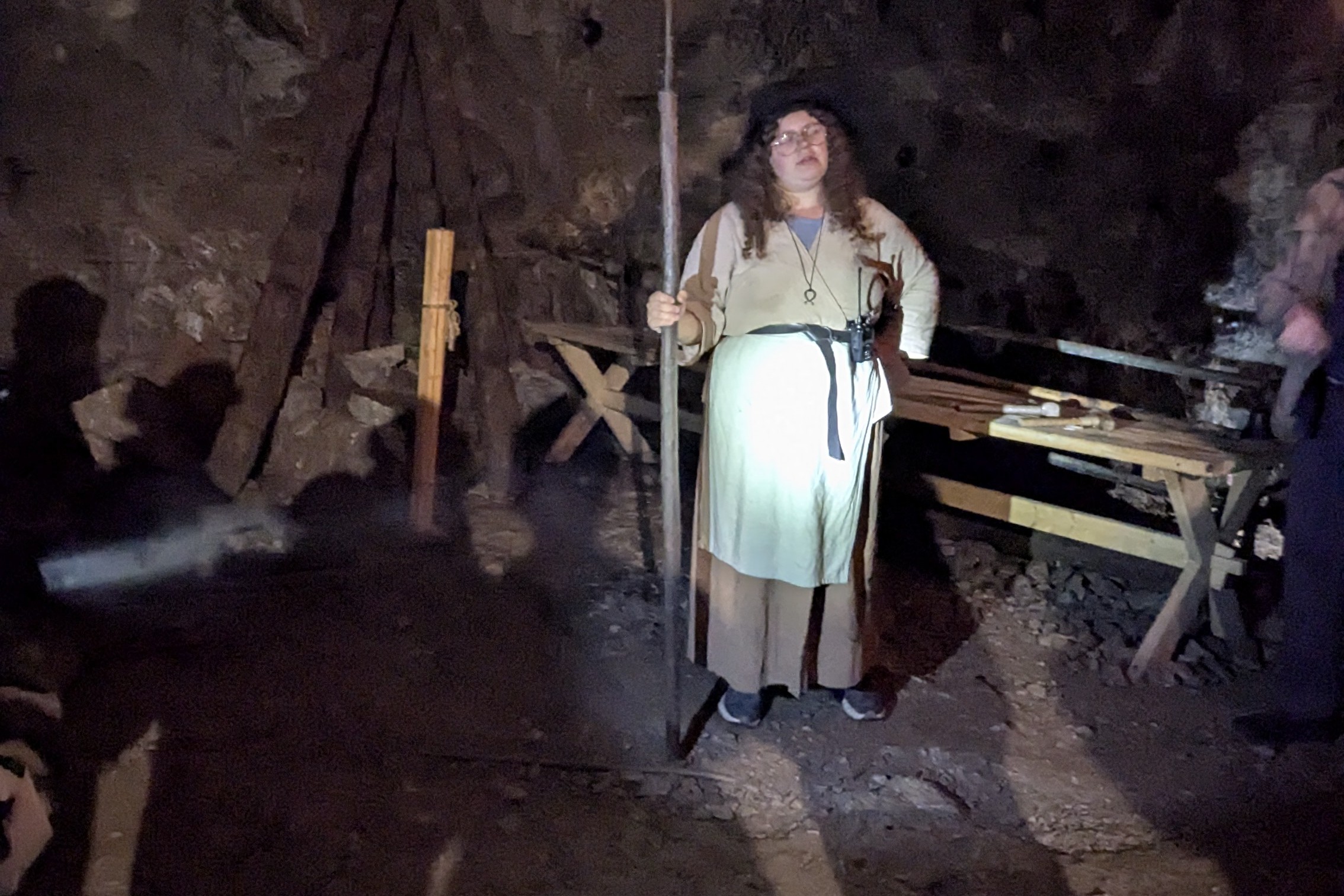
Darkness, damp rock, narrow tunnels and suddenly a vast underground chamber: a visit to Sala Silvergruva is far more than an ordinary museum experience. Deep beneath the Swedish countryside lies a world shaped by more than 500 years of silver mining — and walking through it gives you a vivid sense of what life underground must once have been like.
The experience begins above ground in the historic mining area of Sala Silvergruva, surrounded by the landscape of Västmanland. But it does not take long before you are standing at the entrance to the mine, helmet on your head, ready to descend.
And then you go underground.
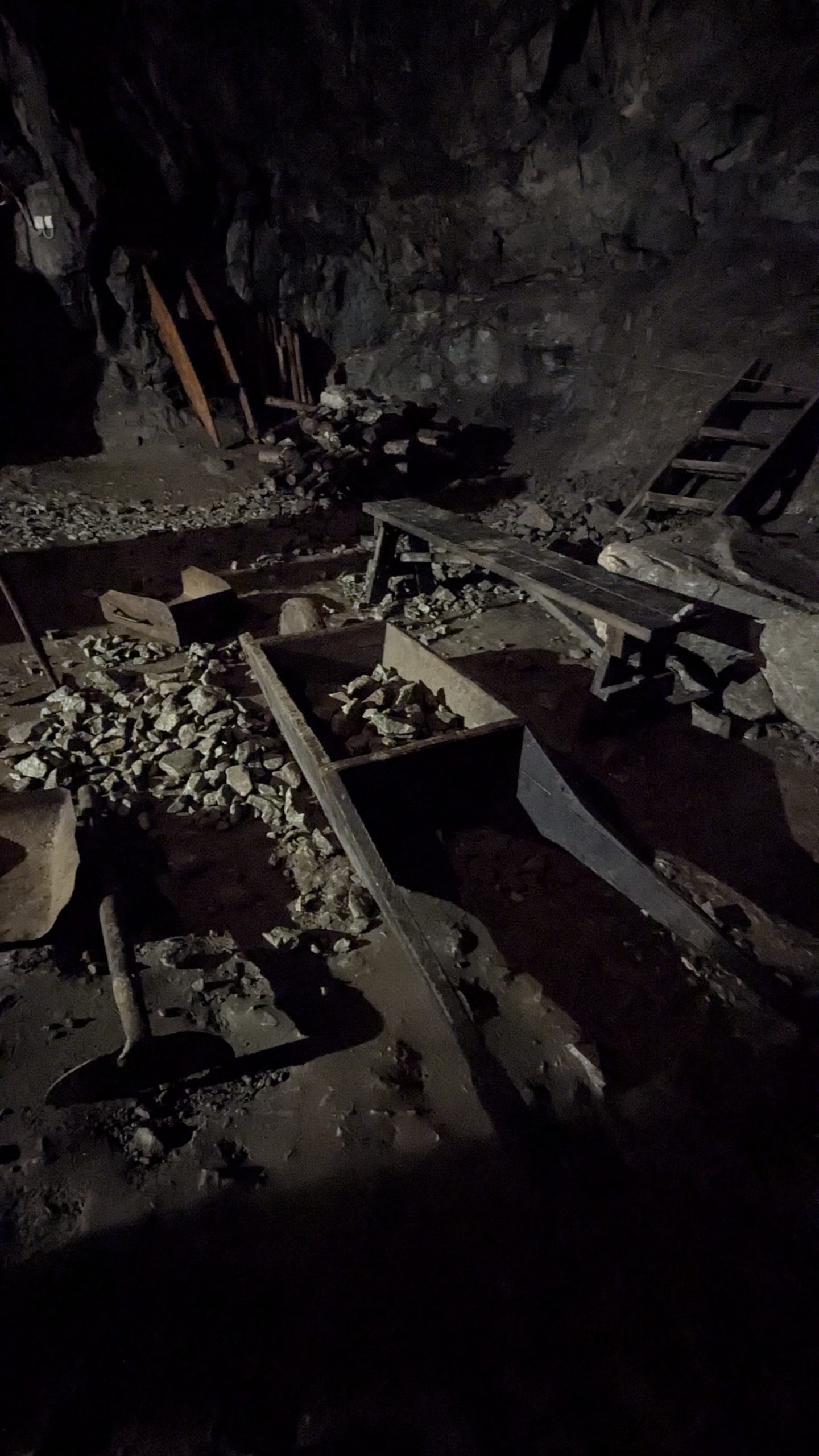
60 metres below the surface
The classic guided tour takes visitors down to the 60-metre level. The route follows stairs through narrow, sometimes steep tunnels, with shafts and larger rock chambers appearing along the way.
The deeper you go, the more the atmosphere changes. Daylight disappears, the temperature drops and the sounds of the outside world fade away.
For a moment, it feels as though time has stopped.
You are walking through spaces where miners once worked with simple tools, searching for silver in the rock. There is something strangely powerful about seeing the marks left behind by centuries of mining and imagining the people who spent their working lives in this darkness.
More than 500 years of mining history
Silver mining at Sala dates back to the late 15th century. The mine operated until 1908, before mining was resumed for a period in the 20th century. The mine finally closed in 1962.
Sala was far more than a local mine. Its silver played an important role in the Swedish economy and was used, among other things, to produce coins.
The scale of the historic mine is impressive. The underground system consists of approximately 20 kilometres of tunnels, around 200 rock chambers and numerous shafts.
It is almost like discovering a hidden city beneath the ground.
A shaft almost as deep as the Eiffel Tower is tall
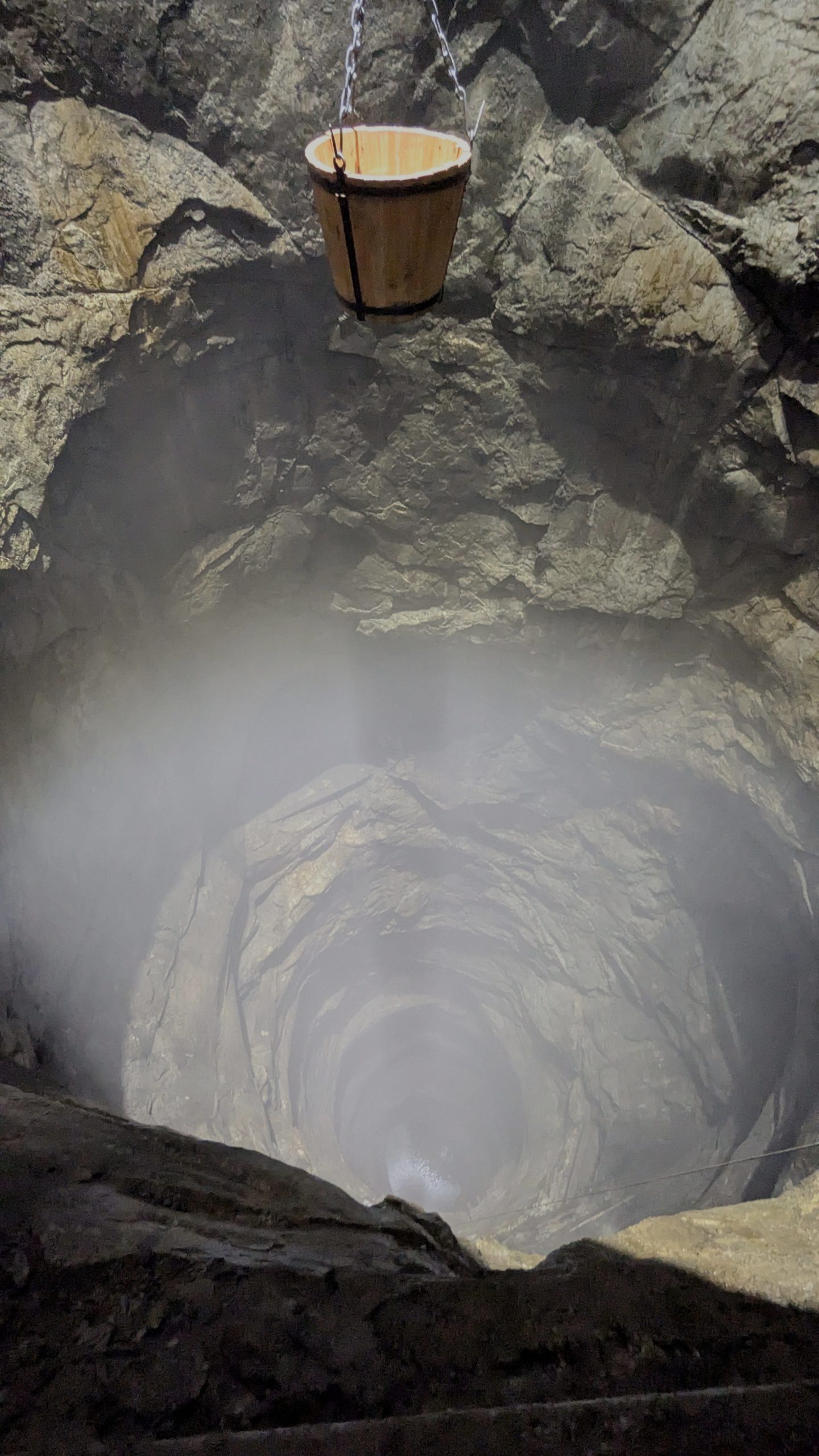
One of the most impressive features of Sala Silvergruva is its enormous shafts.
The Carl XI Shaft reaches a depth of around 318 metres — almost the same height as the Eiffel Tower.
Another famous shaft is Drottning Christinas schakt, named after Queen Christina. During the 17th century, the shaft became one of the major engineering projects associated with the mine.
The mine was even visited by royalty. In 1687, King Charles XI descended into the mine and spent an entire day underground. He was lowered into the mine in a specially designed ore barrel with a seat.
It is one of those historical details that makes the place feel remarkably real.
The silence underground
What stayed with me most, however, was not a particular number or historical fact.
It was the silence.
When the guide stops speaking and everyone in the group becomes quiet, there is almost nothing left to hear. No traffic. No wind. No birds.
Just your own breathing and the occasional sound of water dripping somewhere in the darkness.
It is easy to imagine how isolated the miners must have felt.
The mine also makes it clear just how physically demanding their work was. The tunnels were cold, wet and dark, and the miners worked with tools that were primitive by modern standards. The dangers were part of everyday life.
More than just a mine
Once you return to daylight, it is worth taking time to explore the historic mining area above ground.
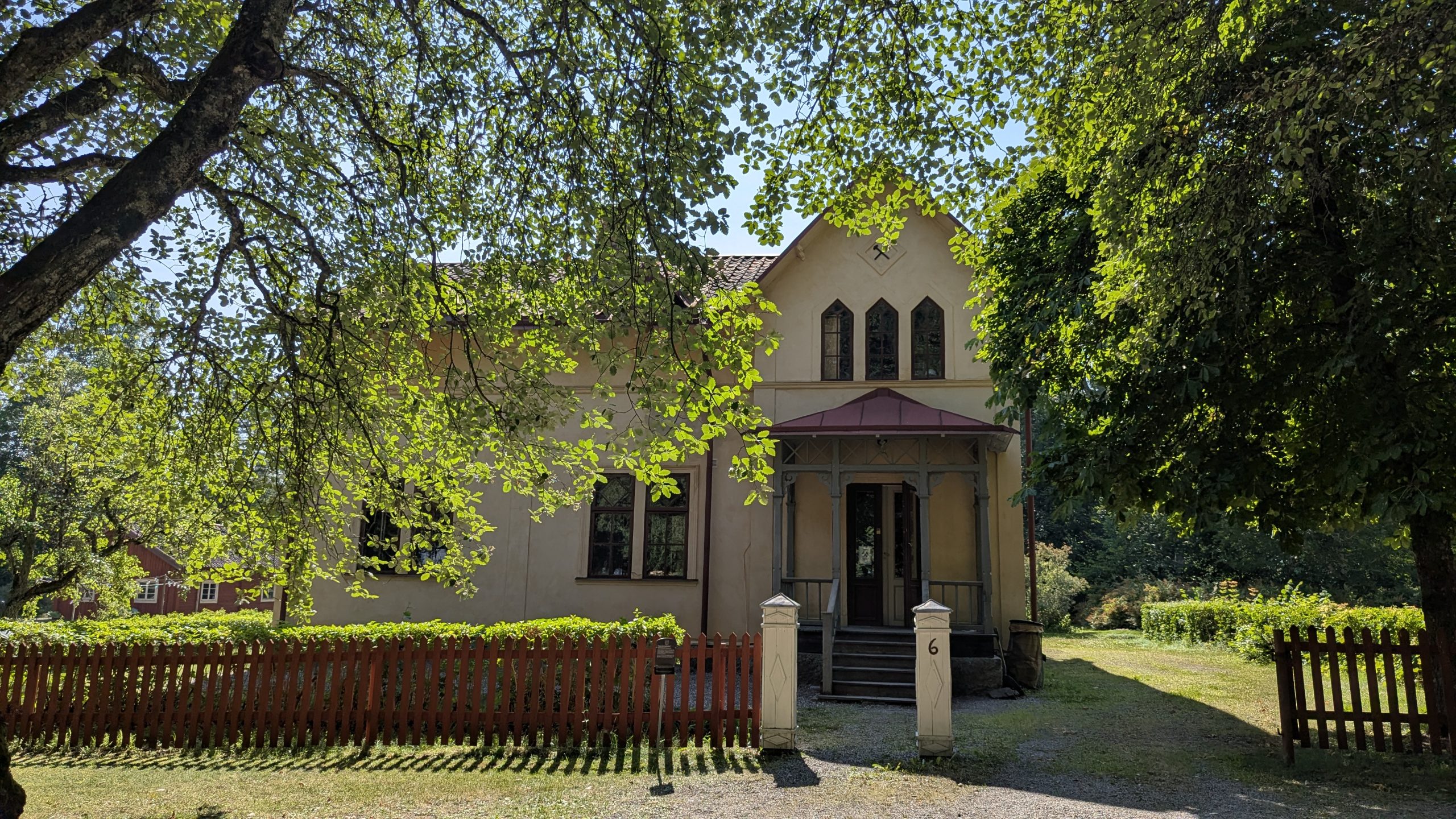
Sala Silvergruva includes 48 historic buildings dating from different periods. Together, they show how closely the entire community was connected to the mining industry.
There are also several exhibitions. The Ångmaskinhuset presents the history of the mine and the development of mining technology. At the Skrädhuset, visitors can experience a virtual descent into the mine using VR technology.
There are also exhibitions about diving in the flooded parts of the mine.
And after spending time underground, you can stop at the historic Konstmästargården, which houses a restaurant and café.
For those who want to turn the visit into a longer adventure, accommodation is also available in the historic mining area.
Which tour should you choose?
Sala Silvergruva offers several different ways to explore the mine.
The classic 60-metre guided tour takes approximately 75 minutes. It is a good introduction to the history and atmosphere of the mine and takes visitors through the underground passages to the 60-metre level.
For those looking for something more adventurous, the Great Mine Tour / Makalös Special lasts around three hours and explores additional sections of the mine.
This tour is considerably more demanding. Some parts can be wet and muddy, and visitors may enter areas away from the fully illuminated routes. At times, the only light comes from your own torch.
For the longer tour, warm clothing, sturdy shoes, gloves and a flashlight are recommended. Helmets are provided.
My tip: If this is your first visit, wear proper outdoor clothing even for the shorter tour. The temperature underground is noticeably lower than outside, and the stairs and uneven surfaces make good footwear essential.
How to get to Sala Silvergruva
Sala Silvergruva is located near Sala in Västmanland, north of Västerås.
The mine can also be reached by public transport. Buses 61, 62 and 569 run from Sala Resecentrum towards the mine area, with stops including Styrars and Gruvan, depending on the route.
This makes Sala Silvergruva a possible destination even if you are travelling around Sweden without a car.
An experience that stays with you
There are museums where you look at history from a distance.
And then there are places like Sala Silvergruva, where you can actually walk into history.
When you finally climb back towards the surface, the daylight feels almost unbelievably bright. Just moments earlier, you were deep underground, surrounded by rock, shafts and traces of centuries of human labour.
Now you are standing beneath the open Swedish sky again.
But the feeling remains.
Perhaps that is what makes Sala Silvergruva so special. The adventure does not need to be created. It is already there, inside the mountain.
More than 500 years of mining have left their mark on the rock — and by walking down into the mine, visitors can experience a small part of that history for themselves.
Practical Information
- Location: Sala Silvergruva, Västmanland, Sweden
- History: Silver mining dates back to the late 15th century
- Mining: Operated until 1908 and again during the 20th century, finally closing in 1962
- Underground system: Approximately 20 km of tunnels and around 200 rock chambers
- Classic tour: 60-metre level, approximately 75 minutes
- Longer tour: Great Mine Tour / Makalös Special, approximately 3 hours
- What to bring: Warm clothes and sturdy shoes; gloves and a flashlight are recommended for the longer tour
- Facilities: Café, restaurant, exhibitions, historic buildings, shop and accommodation
- Public transport: Buses 61, 62 and 569 from Sala
- Important: Tour schedules, prices and opening hours can change, so check the official website before your visit.
Official website: Sala Silvergruva