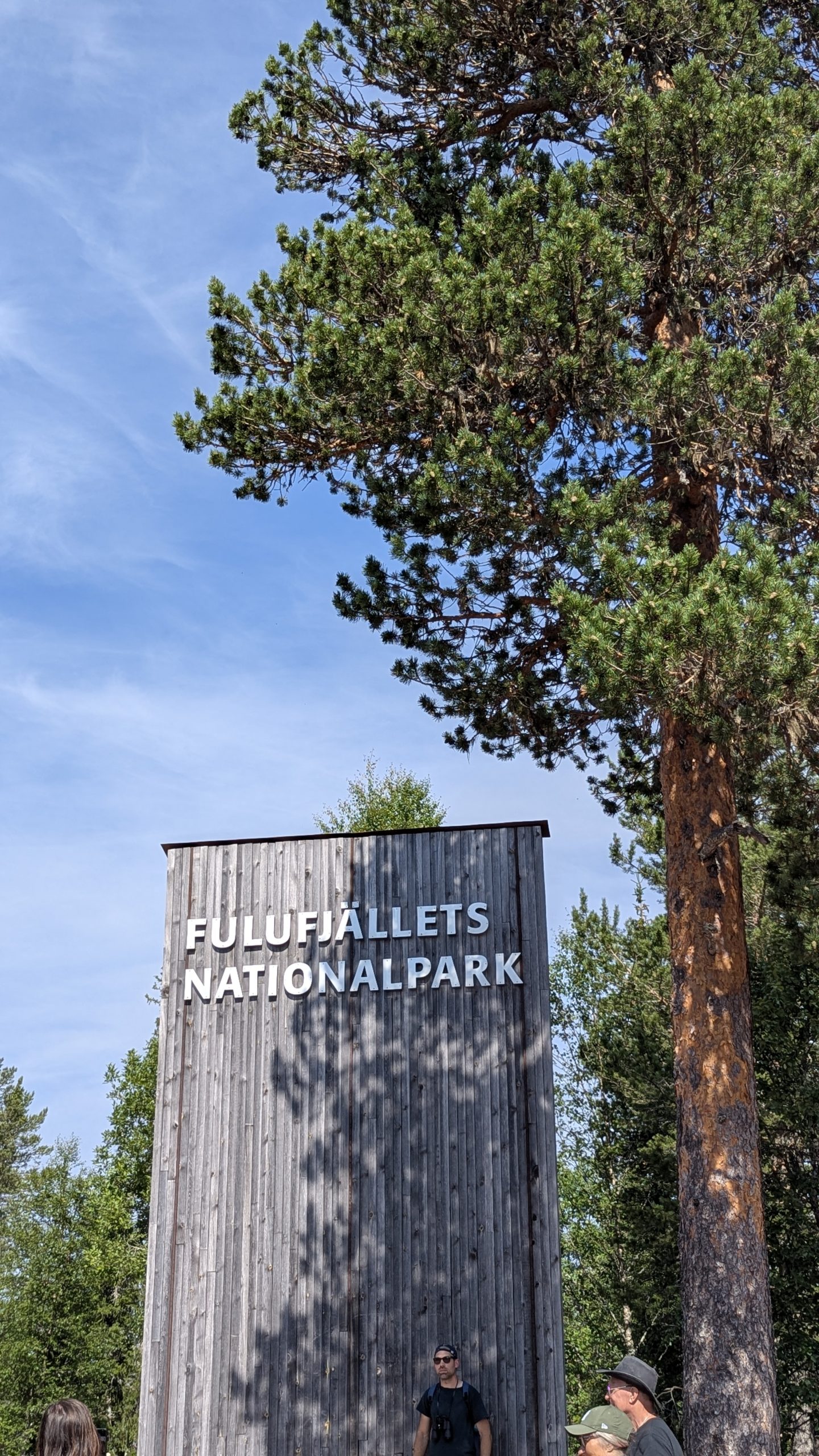
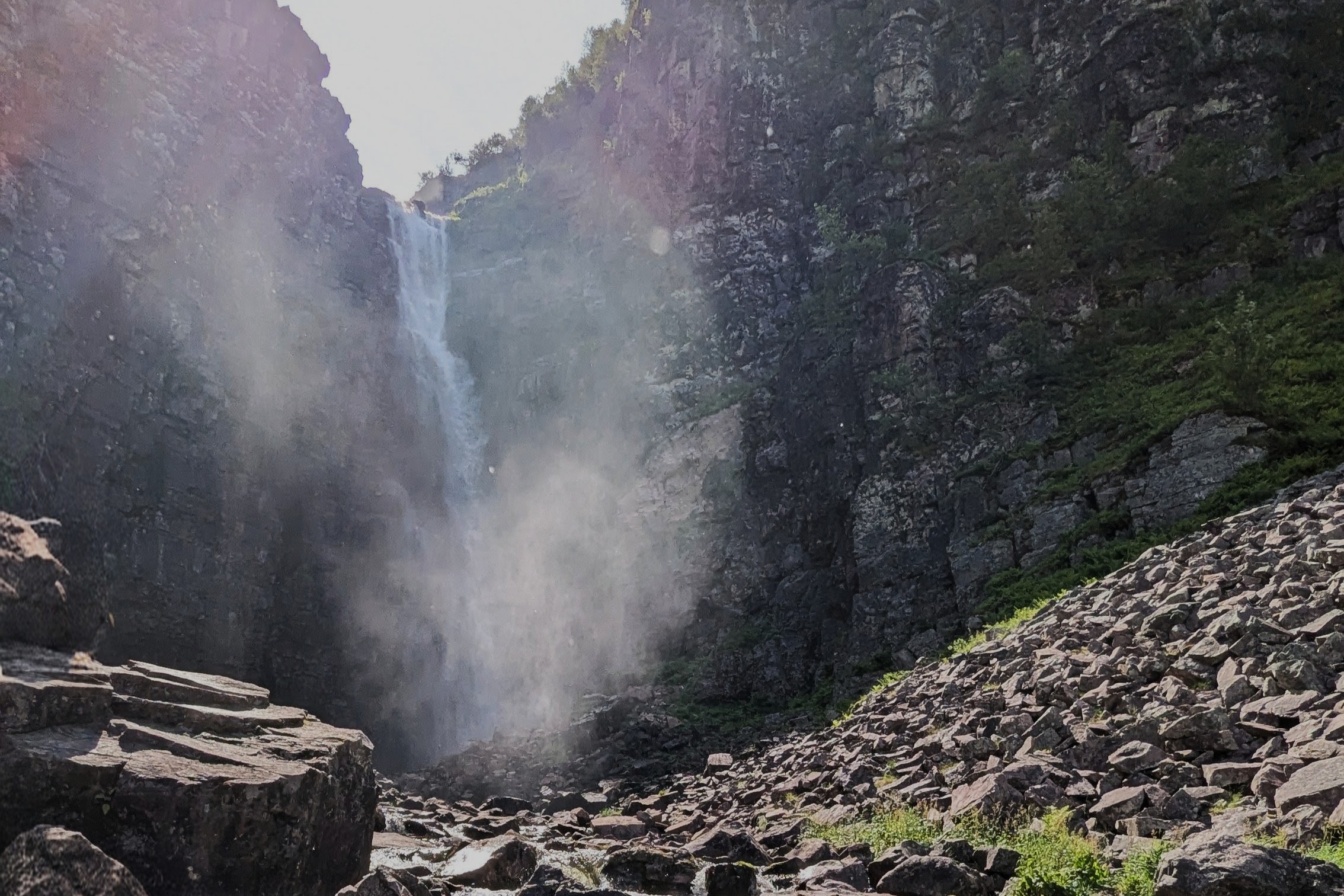
In July, a hike in Fulufjället National Park in Dalarna took me to Njupeskär, one of Sweden’s most spectacular waterfalls. But instead of taking the direct route to the waterfall, I extended the hike along the Jaktfalksleden trail. It became a hike through forests, rocks, an impressive stone desert and unusually hot Swedish summer weather.
Sweden and heat – those two things don’t usually go together for me. So I was all the more surprised by how hot it was on that July day in Fulufjället National Park. My destination was clear: I wanted to see Njupeskär. The waterfall is one of Sweden’s best-known natural attractions and is located in Fulufjället National Park in Dalarna. But what started as a short trip to the waterfall turned into a much longer hike. And that turned out to be a very good decision.
Through the Forest to Njupeskär
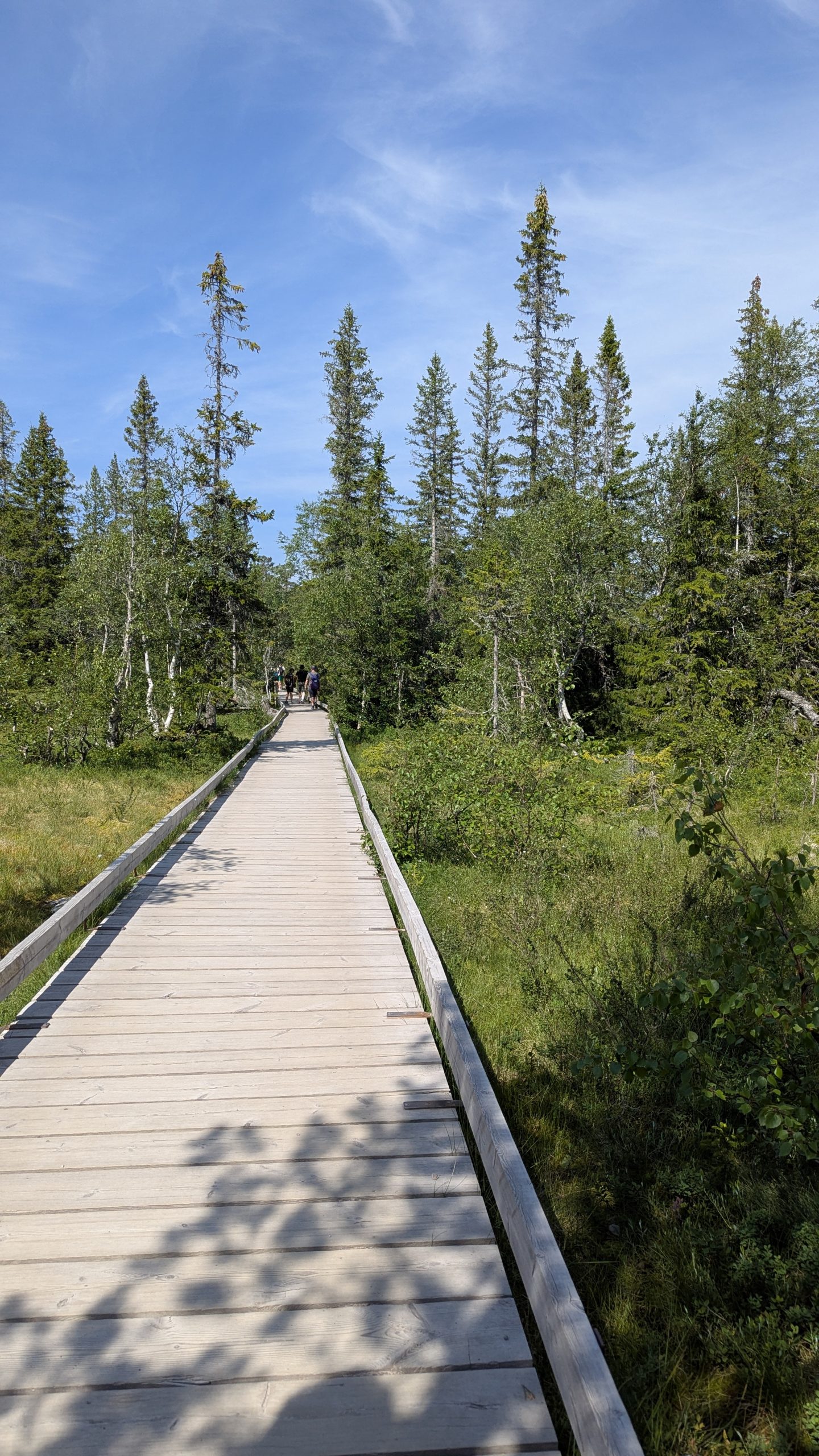
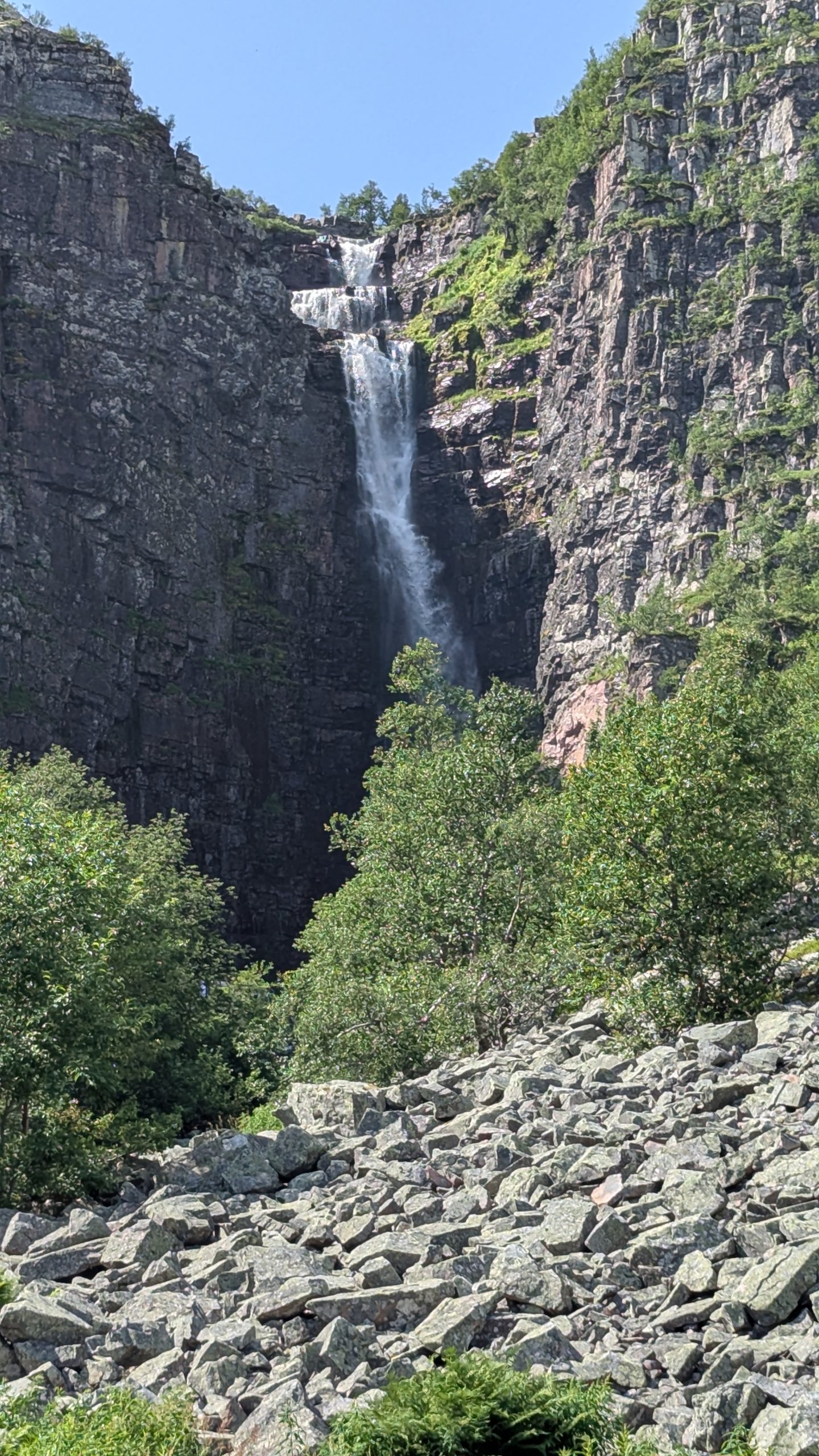
From the Naturum visi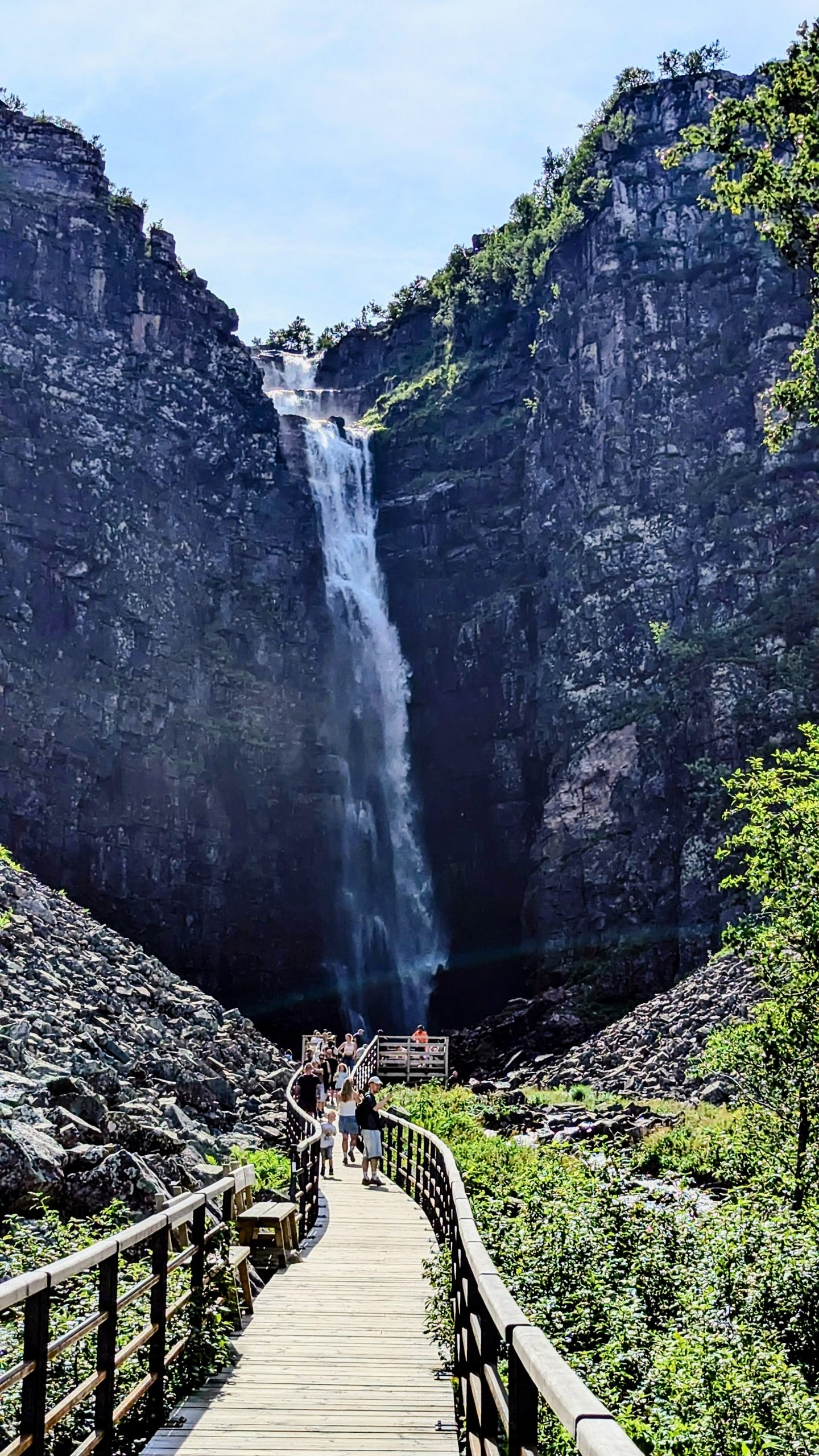 tor centre, a well-marked trail leads through the forest towards Njupeskär. At first, the route feels almost leisurely. The landscape is typical of Fulufjället: dense old forest, rocks, moss and water everywhere. But eventually, you hear it. The sound of the waterfall gradually grows louder, announcing that the destination is getting closer. Then you look up through a valley filled with rocks and boulders. The water plunges a total of 93 metres over the cliff, with 70 metres of free fall. This makes Njupeskär the waterfall with the highest free fall in Sweden.
What is particularly impressive is not only its height but also its surroundings. Njupeskär does not feel like an isolated tourist attraction; it is embedded in a wild and pristine landscape. And there was no question about it: on such a hot July day, being close to the water was especially welcome.
Njupeskär Is Only the Beginning
Many visitors come primarily for the waterfall. Understandably so – Njupeskär is the great highlight of Fulufjället. But I wanted to see more of the national park. So instead of heading straight back, I continued along the Jaktfalksleden and then made my way back towards Njupeskär. With every additional kilometre, the character of the landscape changed. While the direct route to the waterfall is still very much centred around the destination, the longer trail becomes noticeably quieter.
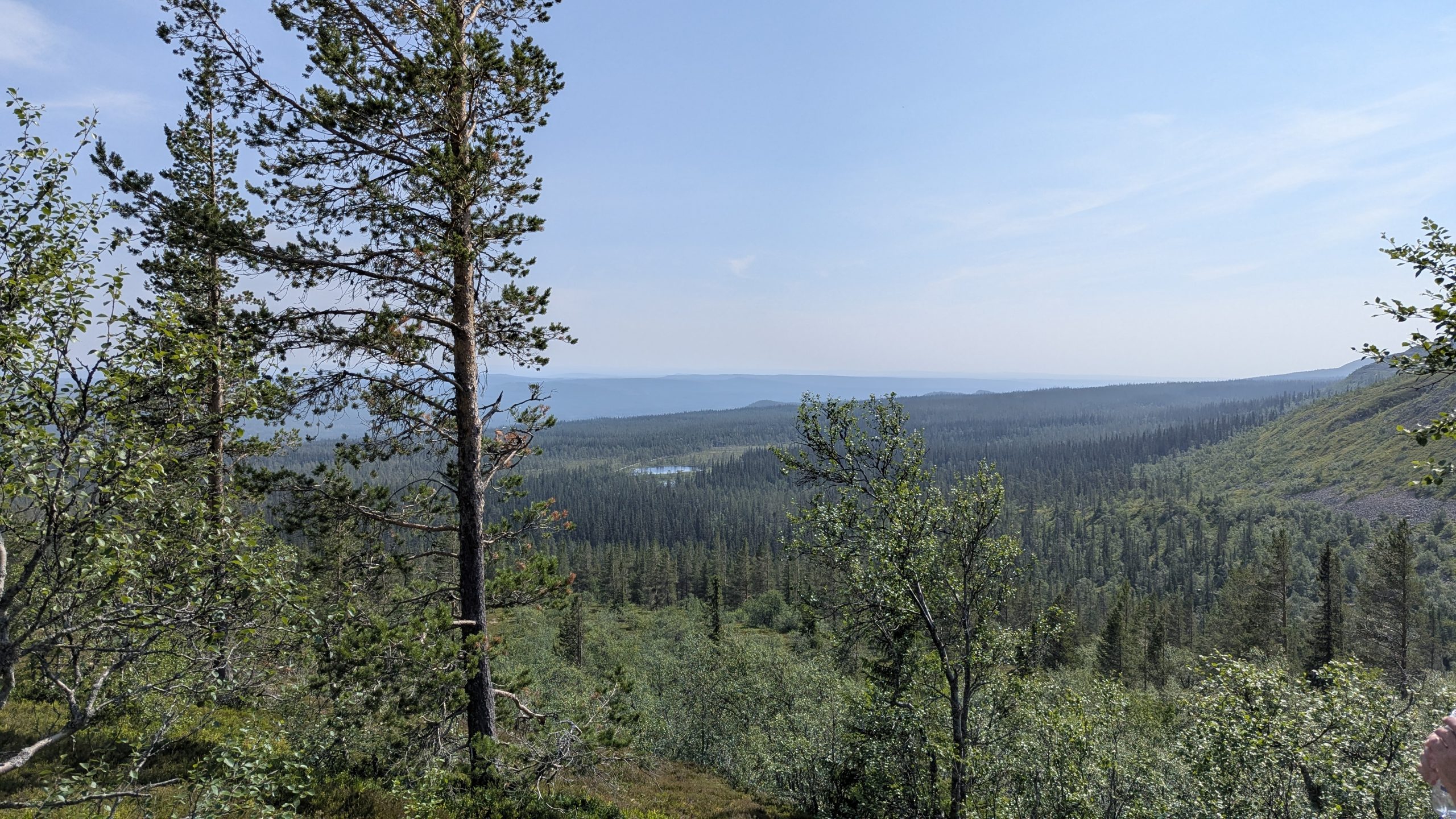
Forest and rocks alternate, with occasional openings offering wider views across the landscape. And above all: once you reach the high plateau, you encounter considerably fewer people, because the climb is no easy walk – and not just in hot weather. In mountaineering terms, I would describe it as short and sharp.
An Impressive Stone Desert on the Fjäll
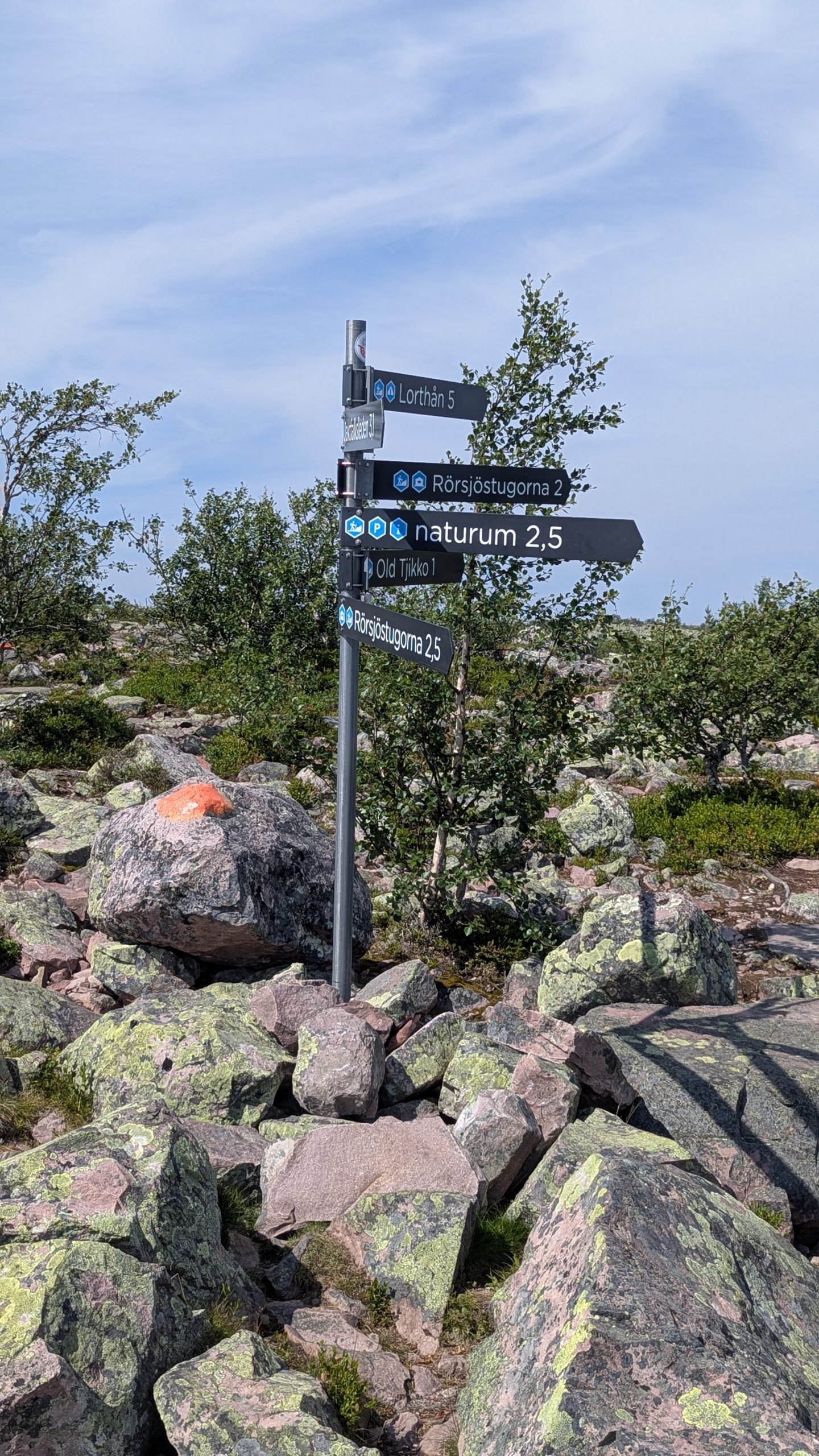
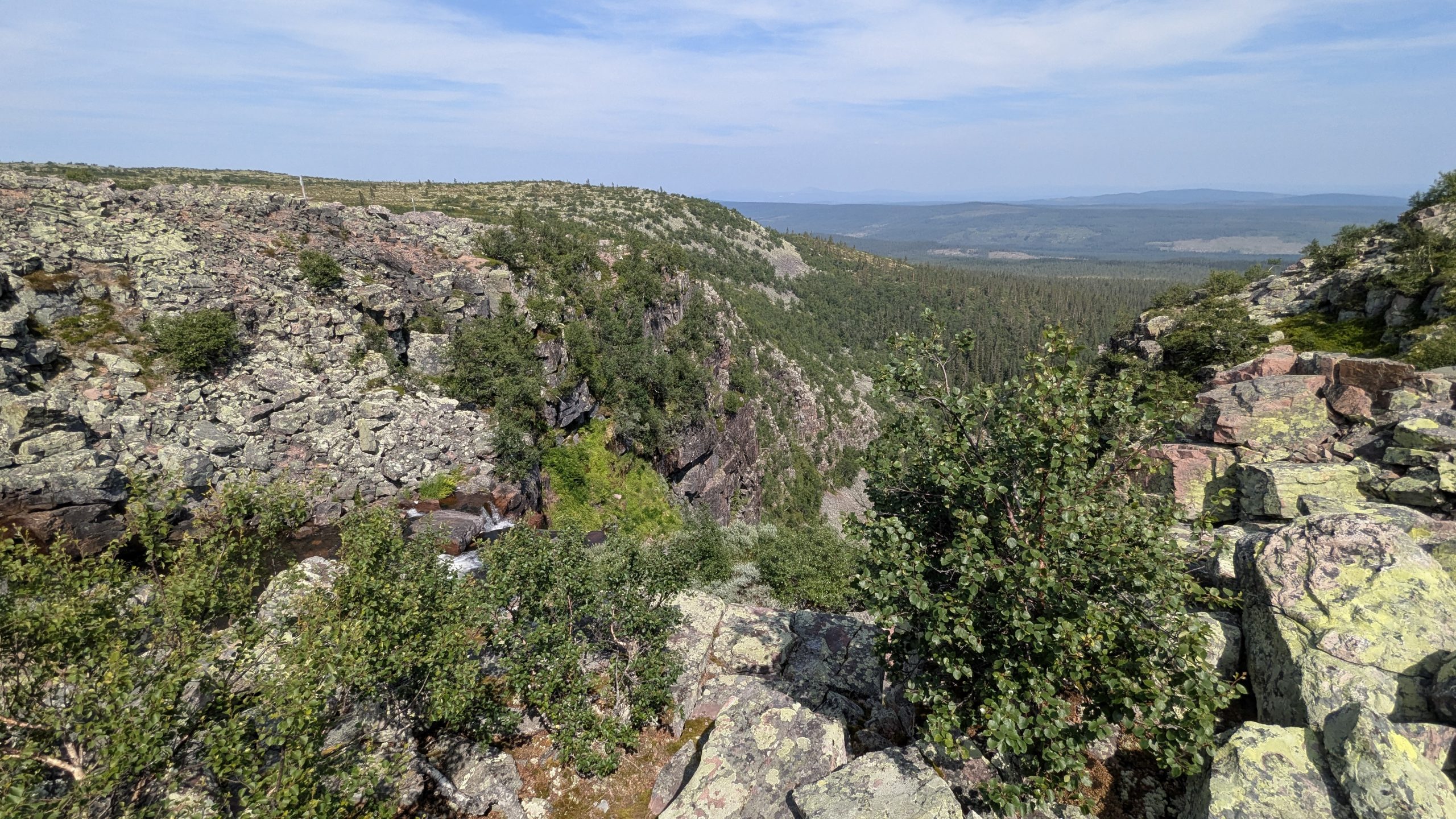
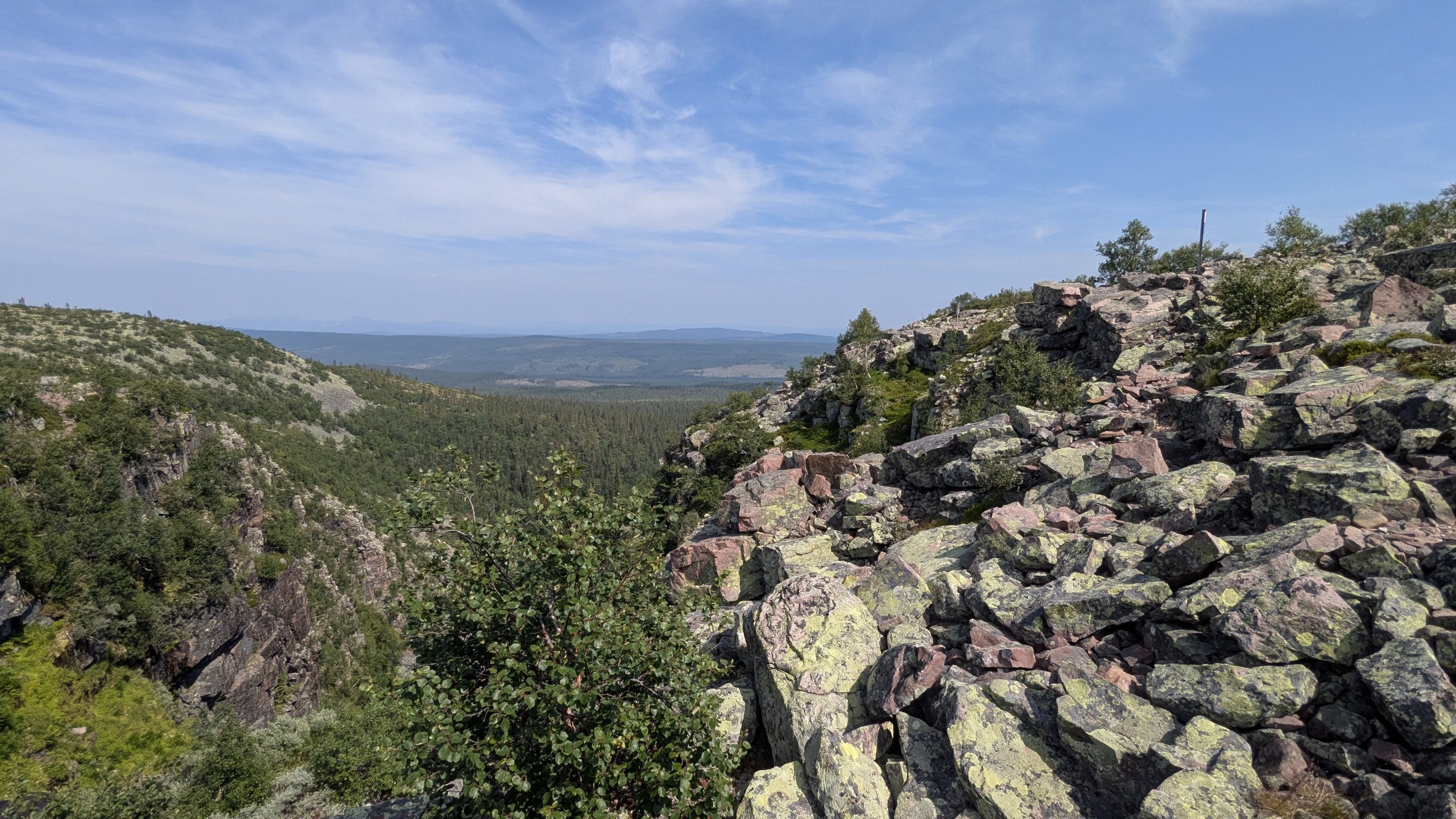
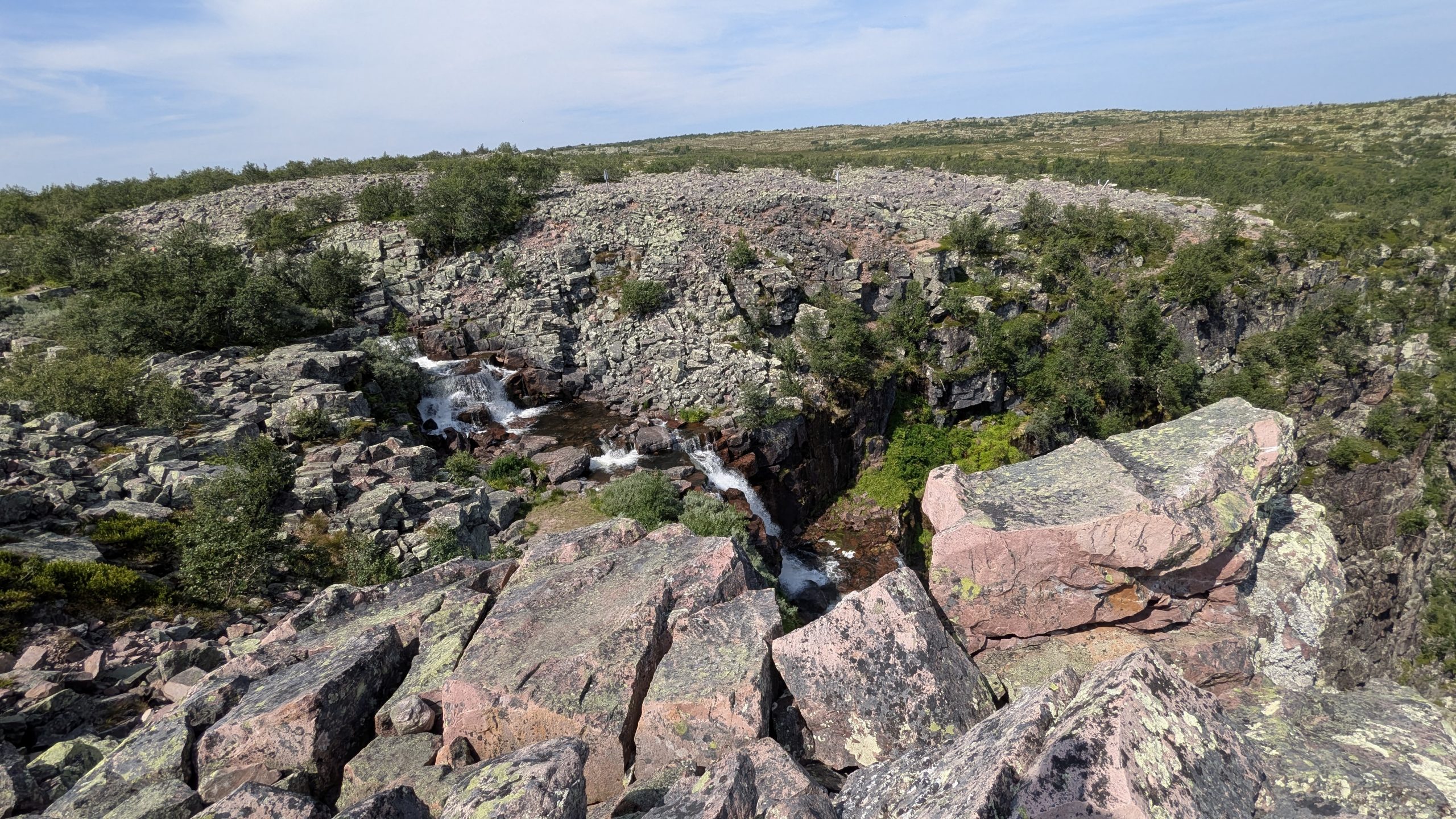
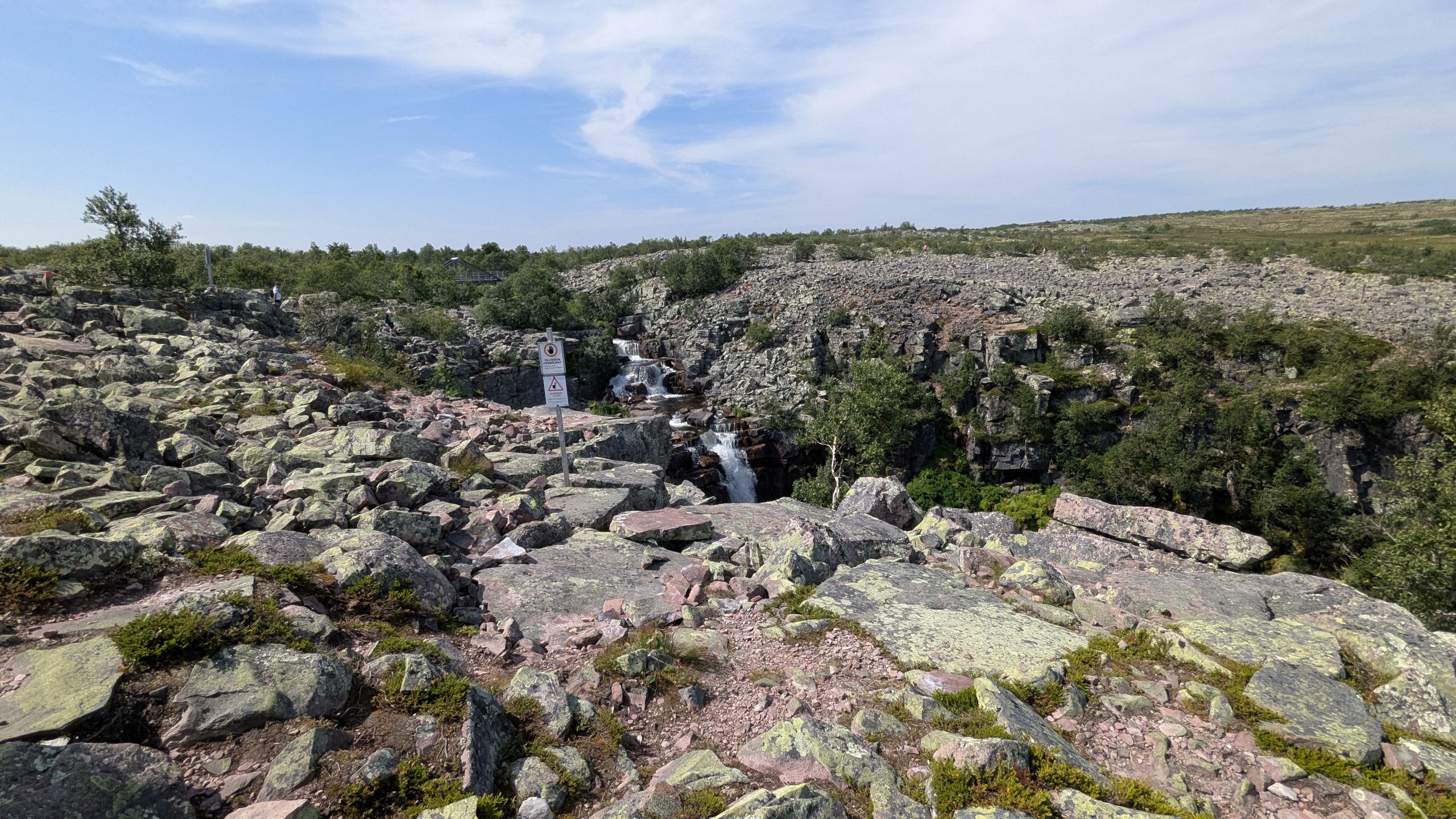
The landscape above the waterfall was particularly impressive to me. Here, the surroundings change dramatically once again. Instead of dense forest, a vast, barren stone desert stretches across the plateau. Rocks and scree dominate the landscape, with hardly any vegetation in sight. After the green forest trails, it feels almost like entering another world.
On that hot July day, the effect was even more intense. The sun beat down on the exposed rocky landscape, there was very little shade, and the heat was impossible to ignore. The Fulufjället really is a geologically distinctive landscape. The high plateau consists of sandstone and is relatively flat. Its steep sides and the forces of erosion have shaped the landscape over a very long period of time. Up on the fjäll, the world therefore looks completely different from the forest below. Mosses, lichens and small alpine plants are able to survive the harsh conditions here. The landscape is sparse and open.
The vastness, the rocks and the almost complete lack of shade gave me an intense sense of wilderness that I found particularly striking. And then there is the contrast with the waterfall: the dry, rocky expanse above, the forest below, and the water of Njupeskär plunging over the cliff into the depths. That contrast is what made the hike so special to me.
Along the Jaktfalksleden
The name of the trail is fitting for th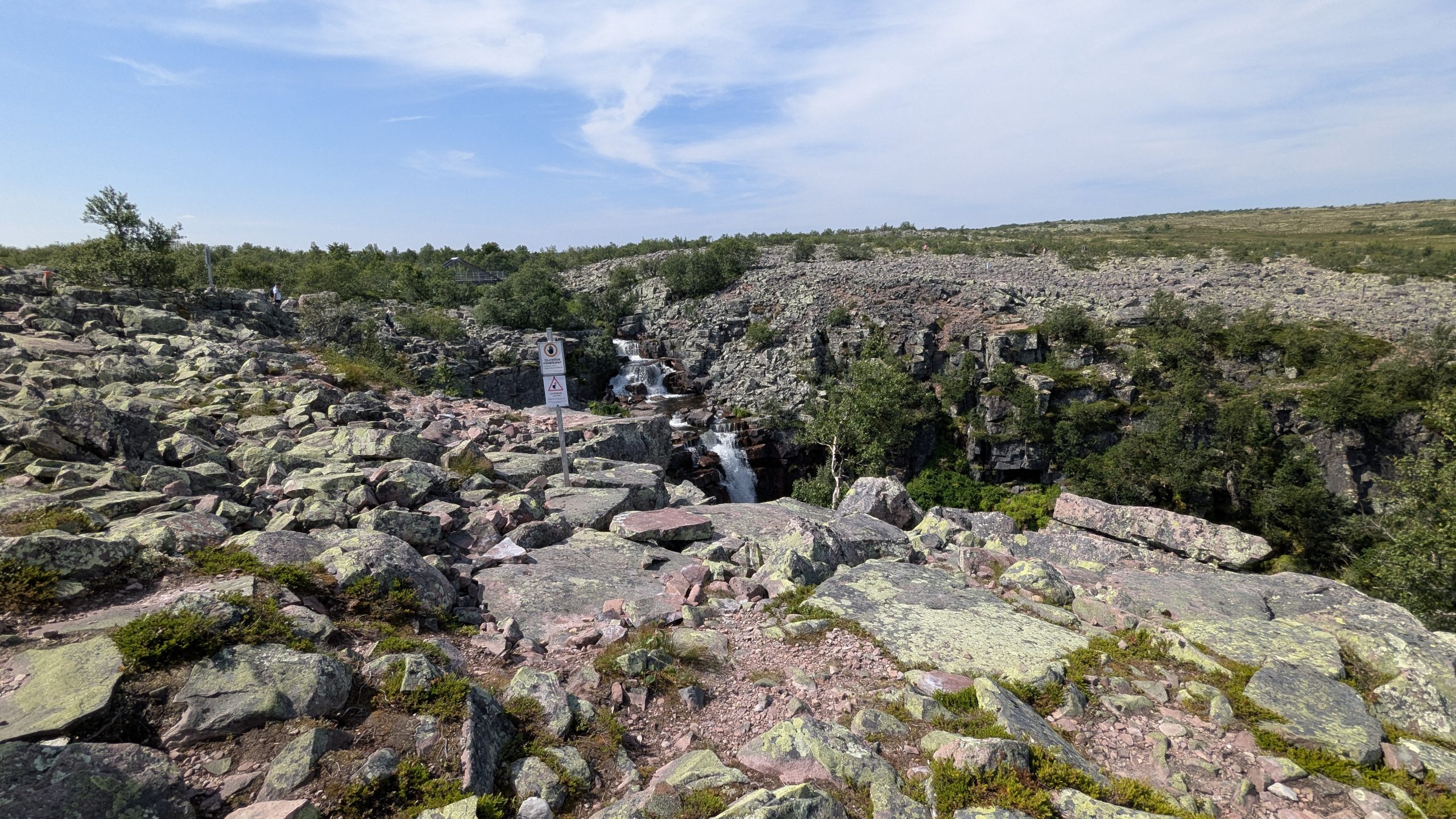 e landscape around the waterfall. Jaktfalk means gyrfalcon. Gyrfalcons occasionally breed on the cliffs around Njupeskär and are considered the largest falcons in the world. I didn’t see one on my hike, though. What I did experience was just how dramatically the landscape changes over a relatively short distance. Down below, there is old forest; higher up, the landscape opens into fjäll heath and barren rocky terrain. The trail across the high plateau is very different from the walk to the waterfall. Parts of it are rocky and uneven, and in high temperatures the additional distance definitely makes itself felt.
Hiking in Extreme Summer Heat
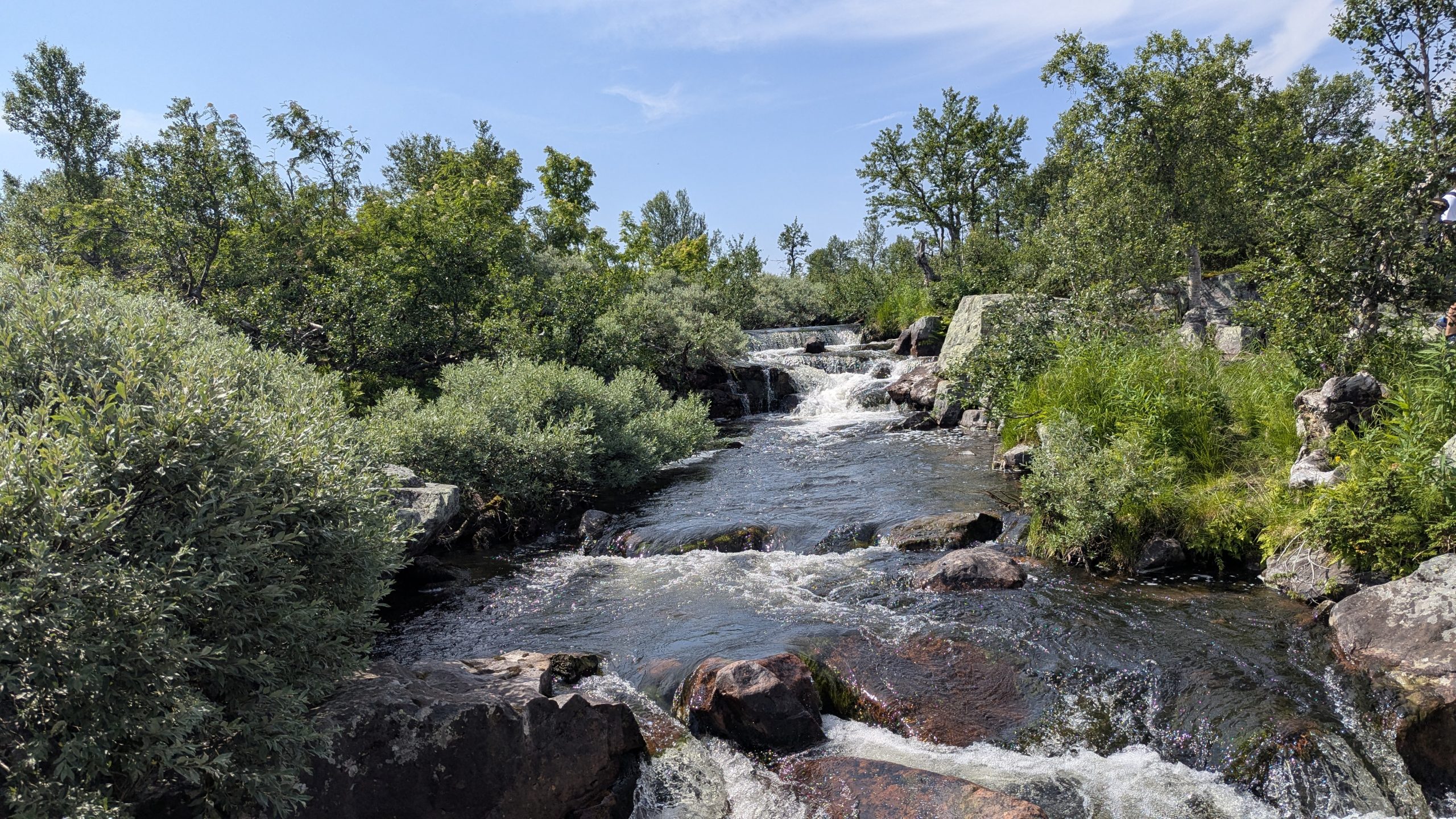
What looks like a perfect Swedish summer hike in the photographs came with one small drawback: it was really hot. If you choose one of the longer hiking routes, the summer temperatures in Fulufjället should not be underestimated. The sun can be intense, and there is very little shade in the exposed areas. So my advice is simple: bring plenty of water, wear sturdy footwear and use sun protection. I was repeatedly grateful for the shaded sections of forest. And when it comes to your water supply, don’t be afraid to refill your bottles from the streams and small waterways along the trail. The Swedes do it too – and they seem to be doing just fine. The landscape is pristine and the water is crystal clear. Out on the exposed rocky landscape, however, there was almost nowhere to escape the sun.
In the end, the heat became just as much a part of the experience as the waterfall itself. This was not the cool, misty Swedish summer day one might perhaps imagine. Instead, the sun was blazing down on the rocks, the forest was warm and dry, and the water of Njupeskär seemed all the more refreshing.
Between Forest, Rocks and Water
What I enjoyed most about the hike was the constant change in landscape. Fulufjället National Park is not simply home to a spectacular waterfall. The trail itself reveals how dramatically the landscape can change over a relatively short distance. At times, the trail passes through dense old forest; then it moves across rockier terrain. There are small streams and patches where the landscape suddenly opens up. The transition from forest to fjäll heath is particularly impressive. Down below, the landscape is green and enclosed; higher up, it becomes barren, open and almost deserted.
Njupeskär is the spectacular centrepiece – but the hike itself is made up of all those smaller moments in between. That is why, if you have the time and the fitness for a longer hike, I would recommend not limiting your visit to the short route to the waterfall.
My Conclusion: Don’t Just Hike to the Waterfall
Njupeskär is, of course, an excellent destination for a hike. If you are short on time, you can simply take the direct route to the waterfall. But if possible, I would allow more time. Combining the route to Njupeskär with the additional loop along the Jaktfalksleden turns a visit into a proper day of hiking. You get to experience more of the landscape, leave the crowds behind for a while and see Fulufjället as more than just the backdrop to a famous waterfall.
If you visit Fulufjället National Park, I therefore recommend not only going to Njupeskär but also taking the time to explore the landscape around it. The waterfall may be the destination – but the journey there tells a story of its own.
More information: (in English)
Fulufjället National Park – Sveriges Nationalparker
Photo: All photographs are © Heike Schwitalla. Any use or reproduction is permitted only with the prior permission of the photographer.
Njupeskärs-Wasserfall
Njupeskärs-Wasserfall
Njupeskärs-Wasserfall
Njupeskärs-Wasserfall
Njupeskärs-Wasserfall
Njupeskärs-Wasserfall
Njupeskärs-Wasserfall
Njupeskärs-Wasserfall
Njupeskärs-Wasserfall
Njupeskärs-Wasserfall