Art Nouveau is still a style that instantly captivates: ornamental lines, floral tendrils, elegant surfaces, sometimes strictly geometric – and always with the sense that art is no longer confined to museums, but becomes part of everyday life. Emerging around 1895, Art Nouveau established itself as a conscious counter-movement to conservative Wilhelminism and as an artistic response to historicism. Instead of “this is how it’s done,” the new rule became: experiment, rethink, break boundaries. This fearless spirit of innovation is exactly why Art Nouveau still feels so modern today.
Diversity instead of a uniform look
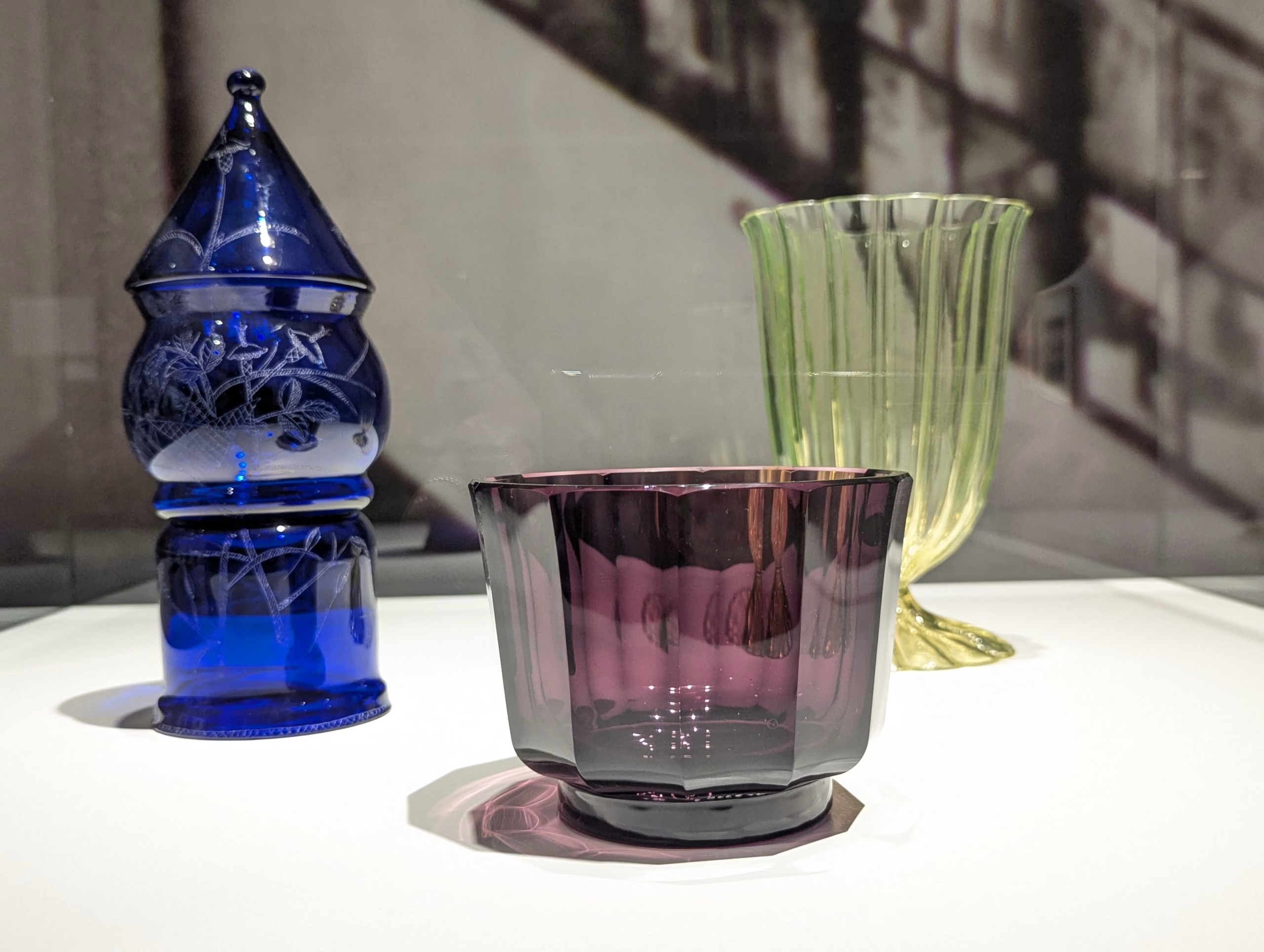
Anyone who associates Art Nouveau only with flowers and flowing curves is seeing just one side of the story. The period was anything but homogeneous: some artists embraced floral ornamentation, while others worked in a clearer, more graphic and geometric direction. On top of that came national and regional variations – so distinct that no single, unified visual language ever emerged. Ironically, diversity became the shared denominator. Even the names tell the story: in France it is called Art Nouveau, in England Modern Style, in Italy Liberty Style, in Austria Secession Style, in Spain Modernismo, in Denmark Skønvirke – and in Sweden, surprisingly, the German term Jugendstil became the standard.
Why ceramics suddenly became art
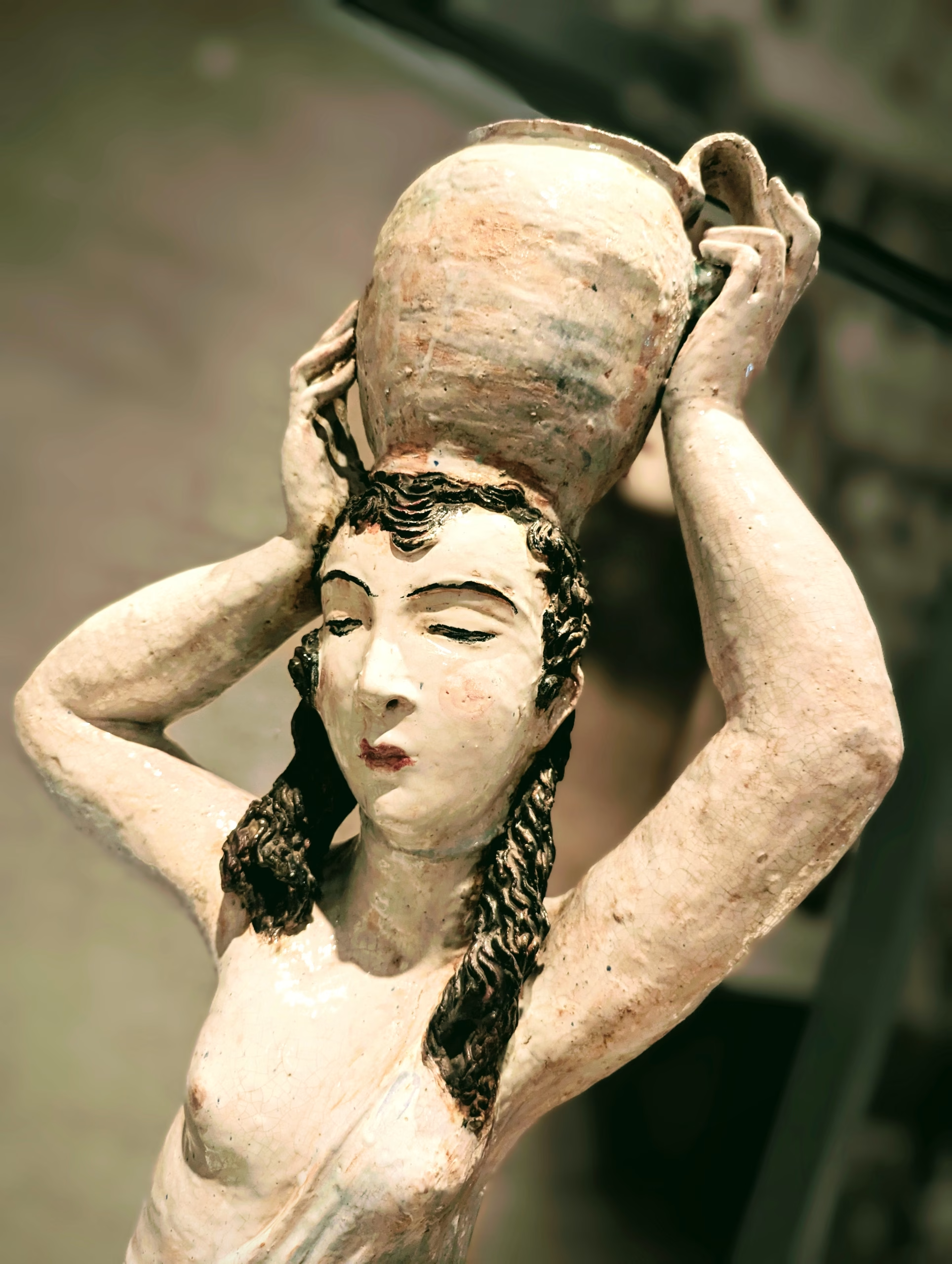
What’s fascinating is that ceramics were barely taken seriously as an artistic medium until around 1900. This was tied to the traditional hierarchy of the arts: architecture, painting and sculpture ranked highest, while the applied arts were considered decorative or secondary. Art Nouveau radically changed that. In the spirit of the Gesamtkunstwerk – the “total work of art” – everyday life itself became a stage for design: living spaces, furniture, wallpapers, curtains, stained glass, cutlery – and, of course, tableware and ceramics. Everything was meant to reflect the new artistic vision and the modern style of the time. Art Nouveau did not think in isolated disciplines, but in complete environments and lifestyles. This led to a defining moment: the “universal artist” began to work directly at the potter’s wheel. Unique, handcrafted ceramics were no longer seen as mere functional objects, but as an integral part of a new, modern culture of living.
Multi-talented creators instead of specialists
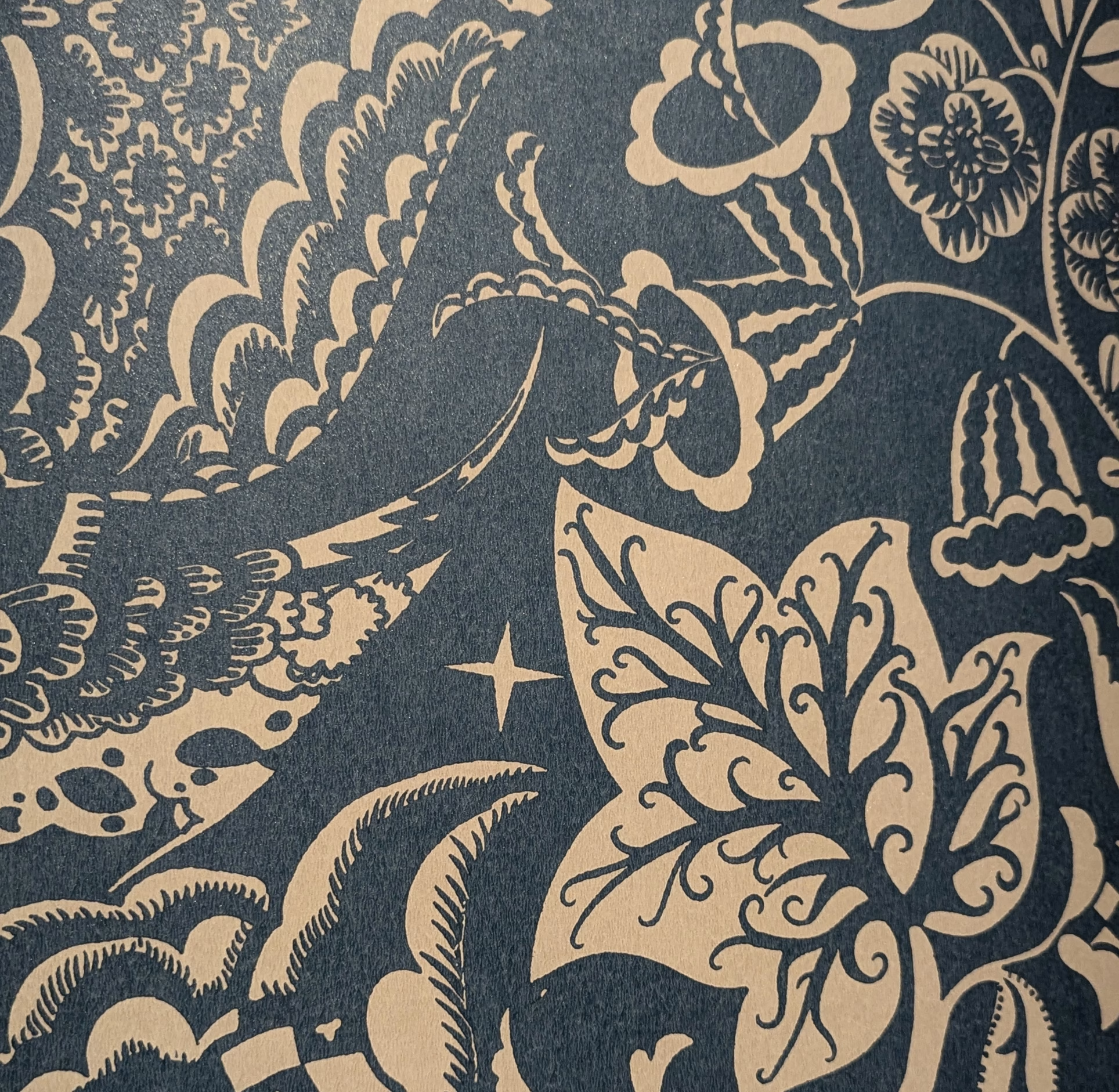
Terms such as “spatial art,” “total work of art,” and “universal artist” are typical for the Art Nouveau era. Many of its key figures were true boundary-crossers: Émile Gallé, Henry van de Velde, Richard Riemerschmid, Peter Behrens, Joseph Maria Olbrich and Max Laeuger did not limit themselves to one field, but moved confidently between design, architecture, applied arts and fine art. Peter Behrens captured this philosophy in a single sentence: “Style is the symbol of the overall sensibility, the entire outlook on life of an era, and reveals itself only in the universe of all the arts.”
Exhibition tip: “Art Nouveau International” in Staufen
Anyone wanting to experience this idea of ceramics as both art and lifestyle statement can do so from 6 February 2026 at the Keramikmuseum Staufen. The exhibition “Jugendstil international – Keramische Kunst ohne Grenzen” presents Art Nouveau ceramics in their international diversity – as a style without borders and as an art form that was always far more than decoration. Dates: 6 February 2026 – 28 November 2027. Opening hours: Wed–Sat 2–5 pm, Sun 12–5 pm. Admission: €2.50 / reduced €1.50. Free entry with the Museums-Pass-Musées.
Alle Infos: https://www.landesmuseum.de/